Jul 08, 2026
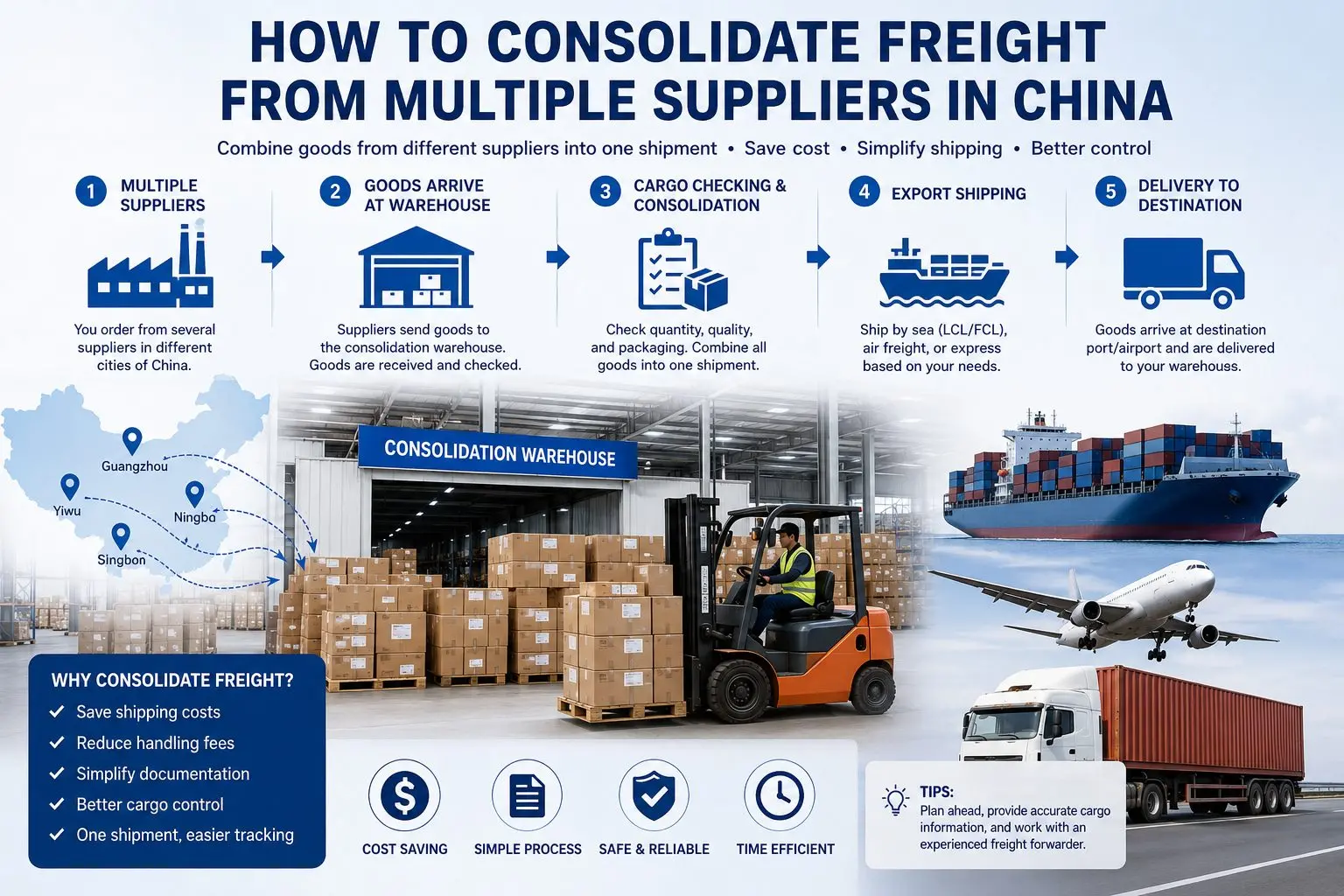
How to Consolidate Freight from Multiple Suppliers in China
Customs clearance from China to USA is the process of declaring imported goods to U.S. Customs and Border Protection before the goods enter the U.S. market. The process checks what the goods are, where they come from, how much they are worth, and what duties may apply.
This process is not only paperwork. It is a legal step in international trade. If the importer gives wrong details, the shipment may face delays, extra fees, or inspection. If the documents are clear, customs clearance can move faster.
Importers can read a practical service guide about U.S. import customs clearance from China when they need a clearer view of the full process.
Several parties may be involved. The importer of record is responsible for the import declaration and compliance. The customs broker can file the customs entry on behalf of the importer. The freight forwarder can coordinate shipping, cargo movement, and delivery. The carrier moves the goods by sea, air, rail, or truck.
These roles are different. A freight forwarder manages logistics. A customs broker manages customs entry. Some logistics companies can coordinate both services, but the legal responsibility still depends on the importer, broker agreement, and shipping terms.
The main documents usually include the commercial invoice, packing list, bill of lading or air waybill, arrival notice, and customs entry information. Some products may also need certificates, permits, test reports, or agency approvals.
The commercial invoice is one of the most important documents. U.S. Customs and Border Protection states that a commercial invoice should include an adequate description of the goods, the quantity, and the value (U.S. Customs and Border Protection). This point matters because customs officers use invoice details to review the shipment.
The packing list should match the shipment. It usually shows carton quantity, gross weight, net weight, dimensions, and item details. The bill of lading or air waybill proves that the cargo was shipped. It also connects the shipment with the carrier and consignee.
Duties are usually based on product classification, customs value, and country of origin. Product classification is normally linked to the HTS code in the United States. The customs value is usually based on the transaction value of the goods. Country of origin shows where the goods were made.
The United States International Trade Commission provides the official Harmonized Tariff Schedule for tariff rates and product classification. Importers should not guess the HTS code. A small product difference may change the duty rate. Material, use, function, and design can all affect classification.
If an importer does not know the correct HTS code, the honest answer is: I do not know. The importer should ask a licensed customs broker or request official guidance when needed.
Customs clearance and freight forwarding are related, but they are not the same.
Customs clearance focuses on legal import entry. It deals with documents, duties, taxes, customs review, and cargo release. Freight forwarding focuses on cargo movement. It deals with pickup, export booking, ocean freight, air freight, trucking, warehousing, and delivery.
For example, a full shipping from China to USA plan may include supplier pickup, export handling, sea freight, U.S. customs clearance, and final delivery. Customs clearance is only one part of that plan.
DDP means Delivered Duty Paid. In many China-to-USA logistics quotes, DDP means that the service provider includes freight, customs clearance, duties, taxes, and final delivery in one price. This can be easier for Amazon sellers, e-commerce sellers, and small importers.
Non-DDP shipping is different. The buyer may need to pay duties, taxes, broker fees, and destination charges separately. This method can give the importer more control, but it also needs more customs knowledge.
DDP is simple, but importers should check the details. Some quotes may say “DDP,” but they may not clearly explain inspection fees, storage fees, delivery limits, or special product costs. The buyer should always ask what is included.
Customs delays can happen for several reasons. The most common reasons include incomplete invoices, vague product names, wrong values, wrong HTS codes, missing importer details, and product compliance issues. Random inspection can also delay cargo.
Some products may need review by another U.S. agency. Food, cosmetics, electronics, textiles, wood products, medical items, and battery products may have extra rules. The exact rule depends on the product. If the importer is not sure, the importer should verify the requirement before shipping.
Importers should prepare documents before the cargo leaves China. They should confirm the product name, material, use, quantity, value, HTS code, country of origin, consignee details, and delivery address.
Importers should avoid vague names such as “parts,” “accessories,” or “samples.” A better product description explains what the item is, what it is made of, and how it is used.
Customs clearance from China to USA works best when the importer treats customs as part of the shipping plan. Clear documents reduce risk. Correct product classification reduces duty mistakes. Early communication helps the forwarder and broker solve problems before the shipment arrives.
U.S. Customs and Border Protection. “Commercial Invoice Requirements When Clearing or Filing Entry.” U.S. Customs and Border Protection, 4 Nov. 2025.
United States International Trade Commission. “Harmonized Tariff Schedule.” United States International Trade Commission.
Tell us your cargo details. We help U.S. importers, Amazon sellers, and e-commerce businesses arrange shipping from Chinese suppliers to U.S. warehouses, stores, or FBA centers.