Jun 05, 2026
FCL vs LCL Shipping: Which Is Better for Your Cargo?
Tianjin Port is an important gateway for businesses that buy goods from northern China. Importers should understand its location, shipping options, and booking requirements before they compare freight quotes.
Tianjin Port is a seaport on the Bohai Sea in northern China. It connects inland transport with international shipping. Its terminals allow cargo to move between ships and land transport.
The port serves the Beijing–Tianjin–Hebei region. The Chinese government’s overview of Tianjin Port describes its role as a maritime gateway for this area. The report also identifies rail services linking the port with Beijing’s Pinggu District and Xingtai in Hebei (Xinhua). english.www.gov.cn
The port gives northern suppliers access to overseas markets. Its facilities handle containers and vehicles, among other cargo. Container services are particularly relevant to importers who buy packaged commercial goods.
The port also has an automated container terminal that began operating in 2021 (Xinhua). However, terminal technology alone cannot guarantee a delivery date. A shipment still depends on vessel schedules, customs procedures, and inland transport. english.www.gov.cn
Buyers should therefore assess the whole journey. A convenient loading port can lose its advantage if the selected service has unsuitable departure dates or extra transfers.
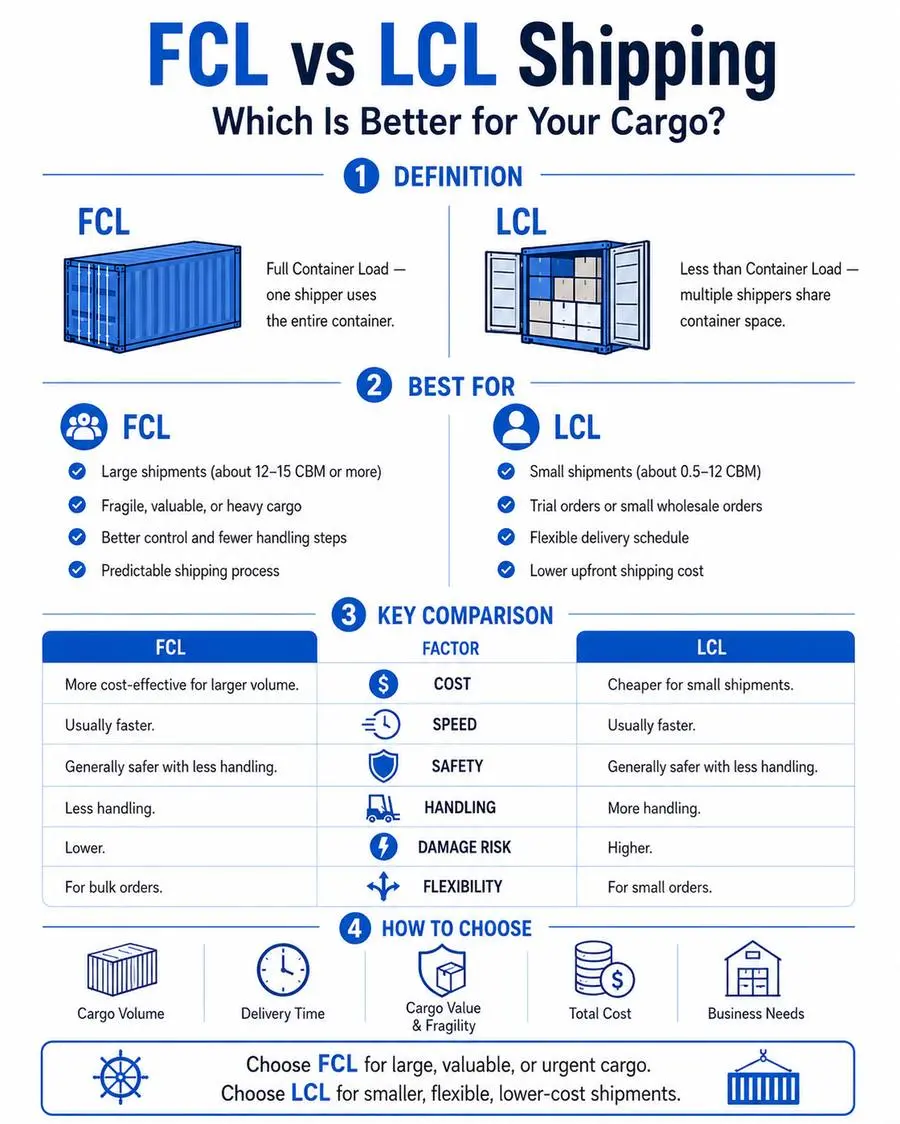
FCL means full container load. One shipper reserves a container for exclusive use. The cargo does not need to fill every part of the container. Importers with larger orders can review Efan Logistics’ FCL shipping services when they assess this option.
LCL means less than container load. Several shipments share one container. This option can suit smaller orders because the buyer does not reserve an entire container.
FCL usually involves fewer cargo handling steps because it avoids shared container consolidation and separation. LCL requires these extra warehouse steps. However, FCL does not always provide a faster vessel journey. Efan DDP
Buyers should compare complete quotes for the same cargo and delivery address. No single cargo volume makes FCL cheaper on every route. Destination handling charges can change the result.
The shipper should confirm the product description, package count, dimensions, and weight. The booking team also needs the pickup address, destination, and cargo readiness date.
The parties should check the commercial invoice and packing list before export. They should also confirm any documents required for the specific goods and destination.
Container weight requires special attention. The International Maritime Organization’s guidance on verified gross mass states that the shipper must provide the verified container weight. The information must arrive early enough for vessel planning. A packed container subject to these rules cannot be loaded without its verified gross mass (International Maritime Organization). imo.org
Tianjin Port has no single transit time for every destination. The selected carrier, route, intermediate stops, and sailing date affect the estimate.
A vessel’s arrival date also differs from the final delivery date. Cargo may still need unloading, customs release, and local transport. LCL cargo also needs separation from other shipments.
The buyer should request separate estimates for the sea journey and final delivery. The forwarder should identify whether the service includes a transfer at another port. The buyer should also allow time for possible schedule changes.
Tianjin should be assessed alongside other available ports when suppliers can deliver to more than one location. Buyers should compare factory trucking, sailing availability, total transit time, and destination costs. A lower ocean rate may offer little benefit if inland transport costs rise. The buyer should also confirm the exact terminal and booking instructions with the forwarder. The port name alone does not identify the receiving point for every shipment. Clear instructions help suppliers send goods to the correct facility before the booking deadline and avoid unnecessary last minute changes.
The total bill may include supplier pickup, export handling, ocean freight, destination charges, customs services, and final delivery. Duties and taxes depend on the goods and importing country.
Container size, cargo weight, and service scope also affect the quote. Efan Logistics’ guide to FCL shipping costs from China to the USA explains these cost factors for American importers. efanddp.com
The buyer should compare the same services and confirm every exclusion. A suitable Tianjin Port shipping plan should match the supplier’s location, cargo needs, delivery deadline, and total budget. Clear booking details help the buyer make that decision with confidence before the goods leave the factory.
International Maritime Organization. “Verification of the Gross Mass of a Packed Container.” International Maritime Organization, www.imo.org/en/ourwork/safety/pages/verification-of-the-gross-mass.aspx.
Xinhua. “Tianjin Port Builds High-Level Maritime Gateway for Beijing-Tianjin-Hebei Region.” The State Council of the People’s Republic of China, 5 Feb. 2024, english.www.gov.cn/news/202402/05/content_WS65c032f5c6d0868f4e8e3cd7.html.
Tell us your cargo details. We help U.S. importers, Amazon sellers, and e-commerce businesses arrange shipping from Chinese suppliers to U.S. warehouses, stores, or FBA centers.