Jul 01, 2026
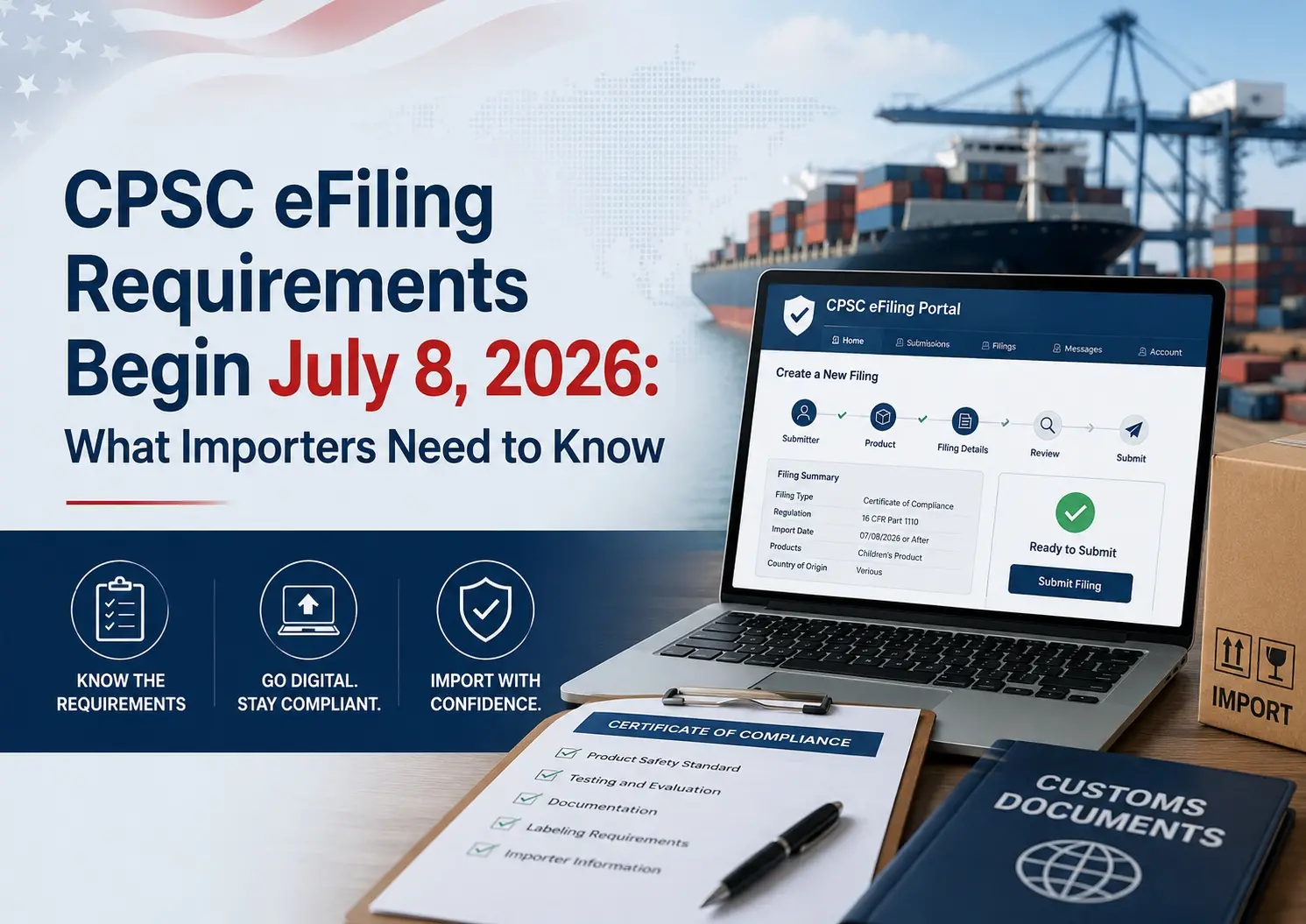
CPSC eFiling Requirements Begin July 8, 2026: What Importers Need to Know
Small business importers face many costs. These costs include product prices, freight charges, customs duties, and warehouse fees. Cargo loss can create another major cost. Goods may suffer damage, theft, water exposure, fire, or other problems during transport.
Freight insurance helps a business manage this risk. However, every policy has limits. An importer must understand the coverage before the goods begin their journey.
Freight insurance protects goods against covered physical loss or damage during transit. The insurance company receives a premium. The insurance company then pays an approved claim according to the policy terms.
People also call this protection cargo insurance or marine cargo insurance. The word “marine” can cause confusion. Marine cargo insurance can cover more than ocean freight. A policy may cover goods that move by sea, air, road, rail, courier, or several transport methods.
The International Union of Marine Insurance’s cargo insurance guide explains that marine cargo insurance can cover goods during transport and related temporary storage. However, the exact route and storage period must appear in the policy or certificate (International Union of Marine Insurance 7).
A small importer may have much of its working capital inside one shipment. A serious loss can therefore affect inventory, customer orders, and cash flow.
A carrier may have some legal responsibility for damaged cargo. However, carrier liability does not provide the same protection as cargo insurance. A carrier may deny liability when the loss falls under a legal defense. A transport contract may also limit the carrier’s payment by package or by weight.
An importer may also need to prove that the carrier caused the damage. This process may take time. Cargo insurance can provide a clearer claim process when the loss falls within the policy. The insurer may later seek recovery from the responsible carrier. The IUMI guide states that possible recovery from a carrier does not replace a cargo insurance policy (International Union of Marine Insurance 61).
A broad policy may cover accidental physical loss or damage during the insured journey. Covered events may include fire, collision, theft, water damage, handling damage, or cargo falling overboard.
Many policies use the Institute Cargo Clauses. Clause A generally provides the broadest protection. It covers risks of physical loss or damage unless the policy excludes them. Clauses B and C cover a narrower list of stated risks.
The phrase “all risks” does not mean that the policy covers every possible event. Every policy contains exclusions. The importer must read those exclusions before shipping the goods.
A standard policy may exclude damage caused by poor packing. A policy may also exclude ordinary wear, natural product decay, or an existing defect in the goods.
Many standard clauses exclude losses caused only by delay. For example, the policy may not pay when a late shipment causes a missed sale but does not cause physical damage to the goods.
Standard cargo clauses may also exclude war and strike risks. An importer may need additional clauses for these risks. The insurer may also apply special limits to fragile goods, used equipment, chilled cargo, or high-value products.
The IUMI guide lists common exclusions such as unsuitable packing, the natural condition of the goods, delay, war, and strikes (30–33).
A small importer can usually choose between insurance for one shipment and insurance for ongoing shipments.
A single-shipment policy covers one stated movement of goods. This option may suit a business that imports only a few times each year. The certificate should clearly show the cargo, route, value, transport method, and coverage dates.
An open cargo policy covers repeated shipments during an agreed policy period. This option may suit a business that imports goods regularly. The importer usually reports each shipment to the insurer under an agreed declaration process.
The IUMI guide describes an open policy as an agreement that covers shipments made during the year. The guide also explains that the policy may restrict some cargo, countries, routes, vessels, or transport methods (17–18).
The buyer and seller should state the insurance responsibility in the sales contract. They should also use a clear Incoterm.
The U.S. International Trade Administration’s Incoterms guide explains that Incoterms divide tasks, costs, and risks between the buyer and seller. These rules also state which party must arrange transportation, insurance, documents, and customs work (International Trade Administration).
CIF and CIP require the seller to arrange cargo insurance. Other Incoterms may leave the buyer responsible for arranging suitable protection.
An importer should not assume that seller-arranged insurance provides enough coverage. The importer should request the insurance certificate. The importer should then check the insured value, cargo description, route, deductible, exclusions, and final point of coverage.
The importer should first calculate the full financial risk. The product invoice may not show the complete possible loss. The importer may also lose freight charges, insurance costs, and other expenses.
The importer should give the insurer accurate information about the goods. The importer should explain the packaging, route, transport methods, transfer points, storage periods, and shipment value.
The importer should also confirm where coverage begins and ends. A policy may cover a port-to-port journey. Another policy may provide warehouse-to-warehouse coverage. The wording decides the actual protection.
The importer should compare more than the premium. The importer should review the deductible, maximum payment, excluded risks, claim rules, and insurer’s service network.
The importer should inspect the cargo before accepting delivery. The importer should record visible damage or missing packages on the delivery document.
The importer should take clear photographs of the goods, cartons, pallets, container, and seal. The importer should keep the damaged goods and packaging for inspection.
The importer should notify the insurer, freight forwarder, and carrier quickly. The importer should follow the deadlines stated in the policy and transport document.
The insurer may request the insurance certificate, commercial invoice, packing list, bill of lading or air waybill, delivery record, photographs, survey report, and claim statement. The required documents depend on the loss and policy terms (International Union of Marine Insurance 39–41).
Freight insurance cannot prevent cargo loss. However, a suitable policy can protect a small importer from a serious financial problem.
The importer should not depend only on carrier liability. The importer should check the Incoterm, policy coverage, insured route, exclusions, deductible, and claim process before shipping.
A clear policy and complete shipping records can make a future claim faster and easier to manage.
Tell us your cargo details. We help U.S. importers, Amazon sellers, and e-commerce businesses arrange shipping from Chinese suppliers to U.S. warehouses, stores, or FBA centers.