May 25, 2026
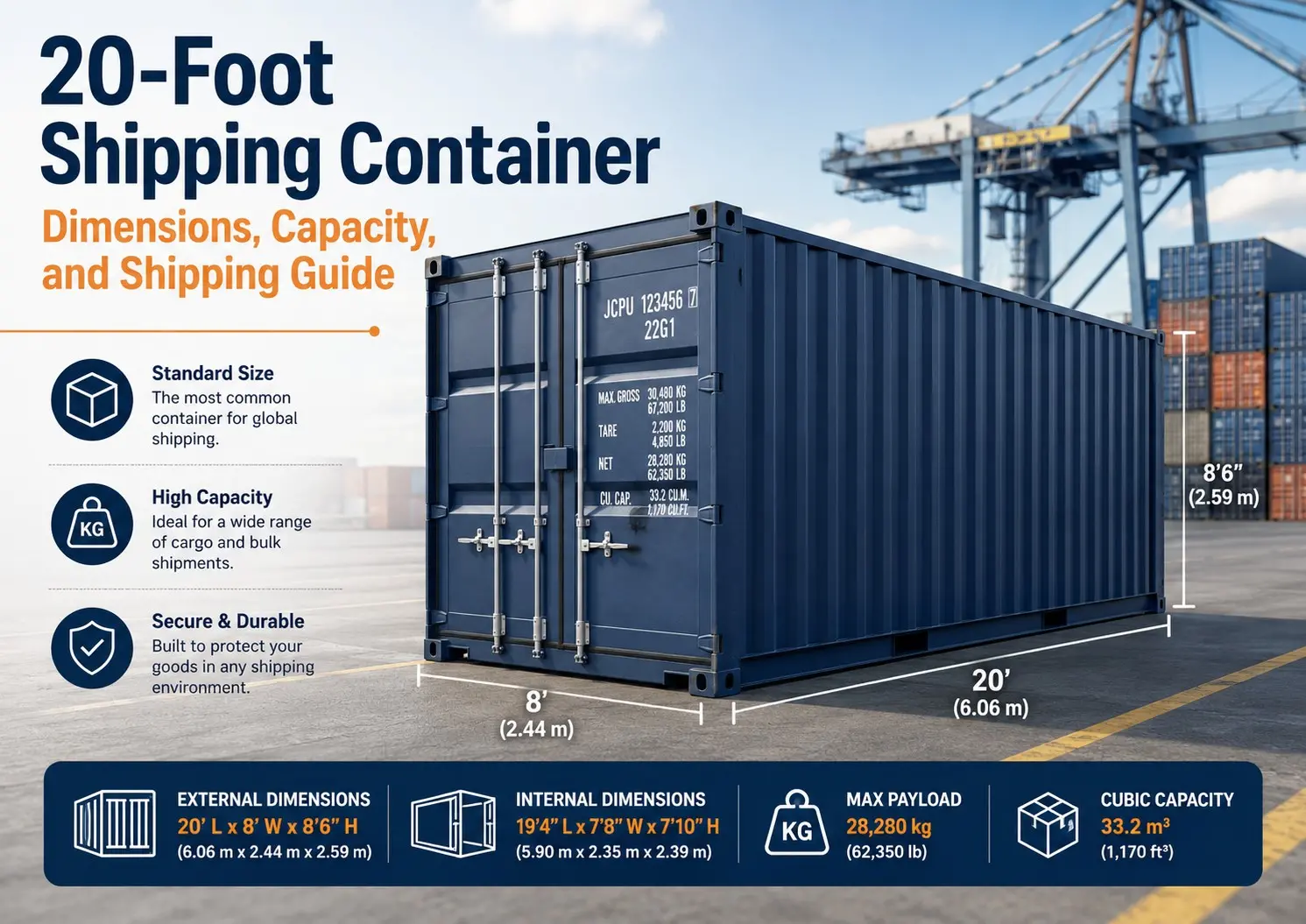
20-Foot Shipping Container Dimensions, Capacity, and Shipping Guide
Buyers who ask “what is a dat” usually want to know where a seller’s shipping duties end. In international trade, DAT means Delivered at Terminal. This Incoterms® 2010 rule places delivery after unloading at an agreed destination terminal. However, buyers should check the rule’s year. Incoterms® 2020 renamed DAT as DPU, or Delivered at Place Unloaded.
Under DAT, the seller delivers when the goods have been unloaded from the arriving vehicle and made available to the buyer at the named terminal. The seller carries the transport risk until that delivery point. The buyer then takes over the risk, subject to the rule’s provisions.
DAT can cover different transport methods, including journeys that combine them. The International Chamber of Commerce’s introduction to Incoterms® 2010 explains DAT’s delivery point and its use across transport modes. It also separates the seller’s delivery costs from import clearance costs (International Chamber of Commerce, “Incoterms Rules 2010”).
The seller arranges transport to the agreed terminal and handles unloading there. The seller also handles export clearance. The buyer handles import clearance and the related duties and taxes. The buyer also needs to plan any further transport after delivery.
Buyers should therefore request a written breakdown of the shipping quote. That breakdown should identify the destination terminal, unloading work, and any services outside the agreed delivery scope. A short label on an invoice should not replace a clear discussion about the shipment.
The ICC’s explanation of Incoterms® 2020 confirms that DAT became DPU. The new name makes clear that delivery can occur at any suitable place. The seller still handles unloading. The change did not introduce unloading as a new seller duty (International Chamber of Commerce, “Incoterms 2020”).
DAP means Delivered at Place. Under DAP, delivery happens while the goods remain on the arriving vehicle, ready for unloading. Under DAT and DPU, delivery happens after unloading. This difference matters when buyers compare quotes. Buyers should compare the same delivery location and unloading scope before they compare prices.
The following example is hypothetical. A Chinese supplier sells boxed home goods to a U.S. importer. Both sides agree on DAT at a specific destination terminal under Incoterms® 2010. The supplier arranges the journey and unloading at that terminal. The importer handles import clearance and arranges collection for its warehouse.
The importer should ask the supplier to identify the exact handover point. A port name alone may leave practical questions unanswered. The importer should also confirm who will send the arrival notice and who will book the collection truck.
For this route, the importer can explore Efan Logistics’ sea freight services from China to the USA when planning the ocean shipment. The importer should still match the service quote to the agreed sales terms.
Buyers should make a simple shipment checklist before booking. The checklist should record the cargo description, package count, delivery address, terminal contact, and expected arrival window. Both sides should confirm these details in writing.
Buyers should also ask about collection deadlines and possible storage charges. They should avoid guessing who pays an extra charge based only on its name. Instead, they should compare the charge with the agreed terms and the cause of the cost.
Before accepting a quote, buyers should ask whether the listed unloading service matches the actual cargo. Heavy boxes may need different handling arrangements from small cartons. Buyers should share package dimensions and weights with the freight provider. They should also keep the supplier’s quote, transport instructions, and delivery records together. These records give everyone a clearer basis for checking what was agreed and what happened during the final handover.
Importers who need help with entry procedures can review Efan Logistics’ customs clearance services. They should discuss the required shipment documents before the goods leave China. Early coordination gives the importer time to correct missing or inconsistent information.
Buyers should start with the delivery arrangement they actually need. They should identify where they want to receive the goods and who can manage unloading. They should then check that the selected rule matches those needs.
A review brings the supplier, buyer, and freight provider together. Each party should clearly confirm its shipping responsibilities. Clear instructions help everyone plan the handover and reduce avoidable confusion.
International Chamber of Commerce. “The Incoterms® Rules 2010.” ICC Knowledge 2 Go, https://2go.iccwbo.org/icc-introduction-to-the-incoterms-2010.html.
International Chamber of Commerce. “Incoterms® 2020.” ICC, https://iccwbo.org/business-solutions/incoterms-rules/incoterms-2020/. Accessed 28 Sept.
Tell us your cargo details. We help U.S. importers, Amazon sellers, and e-commerce businesses arrange shipping from Chinese suppliers to U.S. warehouses, stores, or FBA centers.