Aug 28, 2026
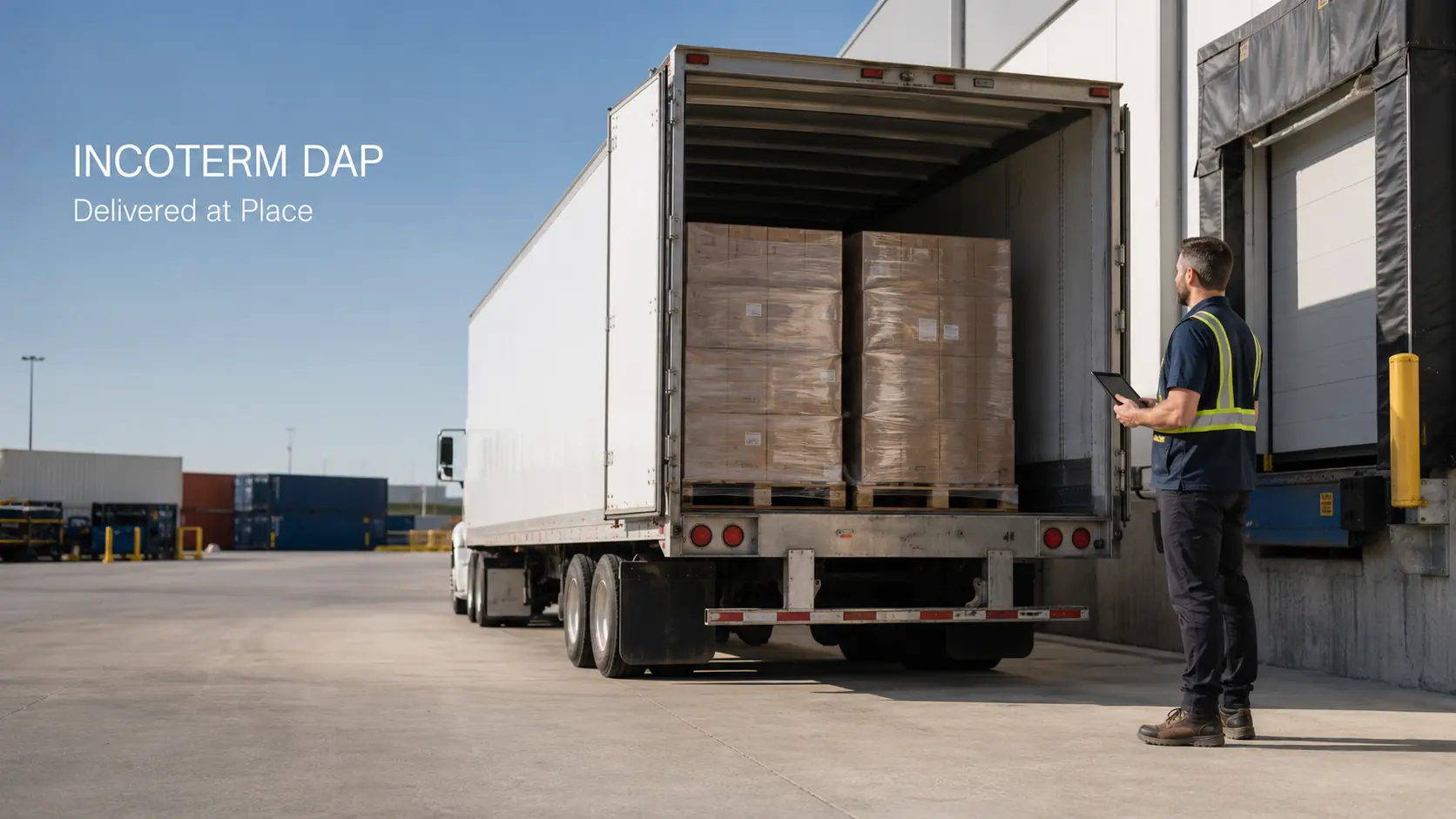
Definition of the Incoterm DAP (Delivered at Place)
Choosing the right freight forwarder affects shipping costs, delivery time, customs clearance, and Amazon receiving. A low quote may look attractive. However, it may exclude duties, labeling, delivery appointments, or destination charges. Sellers should compare the complete service instead of comparing only freight rates.
An Amazon FBA freight forwarder China service arranges cargo transportation from a Chinese supplier to an Amazon fulfillment center or a U.S. third-party warehouse.
The service may include supplier pickup, export handling, sea or air freight, customs coordination, cargo labeling, pallet preparation, and final delivery.
A freight forwarder does not need to own every ship, aircraft, truck, or warehouse used in the route. The forwarder coordinates these service providers. The forwarder also manages documents, schedules, and cargo handoffs.
Sellers can first review the complete process for shipping from China to Amazon FBA before comparing different forwarders.
The cheapest quote may not produce the lowest final cost.
Some quotes include only transportation between two ports. Other quotes include supplier pickup, customs clearance, duties, final delivery, and Amazon appointment booking.
Sellers should request a written list of included and excluded charges. The list should cover:
Pickup and origin handling
International transportation
Customs brokerage
Import duties and taxes
Inspection or storage charges
Final delivery
Amazon appointment booking
Possible redelivery charges
A clear charge list helps the seller compare different quotations on the same terms. It also reduces the risk of unexpected fees.
The forwarder should understand both international shipping and Amazon FBA delivery.
The team should know how to work with the destination address, shipment reference, box labels, carton information, and pallet instructions supplied by the seller. The team should also understand that Amazon receiving requirements and U.S. customs requirements are separate processes.
The forwarder should have experience with the seller’s product type. Batteries, cosmetics, food-related products, children’s goods, and branded products may have additional transportation or import requirements.
The seller should ask the forwarder to identify possible restrictions before collecting the cargo. The seller should also understand the process for U.S. import customs clearance from China.
| Comparison Point | FBA-Specialized Forwarder | General Freight Forwarder |
|---|---|---|
| Amazon delivery | Usually understands FBA references and appointments | May require detailed instructions |
| Labeling support | Often provides labeling or prep support | Support may be limited |
| Delivery options | Often offers direct-to-FBA and 3PL-first routes | Usually focuses on standard warehouse delivery |
| Best use | Regular Amazon inventory shipments | Simple commercial or warehouse shipments |
A general freight forwarder can still provide reliable service. However, the seller should confirm every FBA-related task in writing.
The seller should not assume that “door-to-door” automatically includes product labeling, pallet preparation, import duties, customs clearance, or Amazon appointment booking.
U.S. Customs and Border Protection explains that importers and government agencies share responsibility for legal trade compliance. A broker or forwarder may prepare customs documents. However, the importer should still provide accurate product descriptions, values, classifications, and supporting information.
Sellers should read the CBP Basic Importing and Exporting guidance before approving a customs clearance plan.
For ocean shipping, sellers should ask which Ocean Transportation Intermediary handles the U.S. trade.
The Federal Maritime Commission explains that Ocean Transportation Intermediaries include ocean freight forwarders and Non-Vessel-Operating Common Carriers. U.S.-based OTIs must meet licensing and financial responsibility requirements.
Sellers can review the FMC Ocean Transportation Intermediaries guidance and verify the company or U.S. agent involved in the shipment.
The seller should ask who controls each stage of transportation. The seller should also confirm who files customs documents and who books final delivery.
The written quotation should identify:
The shipping terms, such as DDP, DAP, FOB, or EXW
The Importer of Record arrangement
The duty payment method
Cargo insurance options
Estimated transit time
Shipment tracking procedures
The cargo claim process
All excluded charges
The seller should provide accurate carton quantities, dimensions, weights, product descriptions, cargo values, pickup addresses, and FBA destinations. A forwarder cannot provide a reliable final quotation without these details.
The best Amazon FBA freight forwarder China option is not always the cheapest or fastest company.
The best forwarder provides a clear service scope, a suitable shipping route, accurate document support, and reliable communication. The seller should compare at least two detailed quotations under the same shipping terms.
The seller should choose the provider that can clearly explain every cost, responsibility, customs step, and cargo handoff before the goods leave China.
Federal Maritime Commission. “Ocean Transportation Intermediaries.” Federal Maritime Commission, U.S. Government.
U.S. Customs and Border Protection. “Basic Importing and Exporting.” U.S. Customs and Border Protection, U.S. Department of Homeland Security, 10 Feb. 2026.
Tell us your cargo details. We help U.S. importers, Amazon sellers, and e-commerce businesses arrange shipping from Chinese suppliers to U.S. warehouses, stores, or FBA centers.