Jul 10, 2026
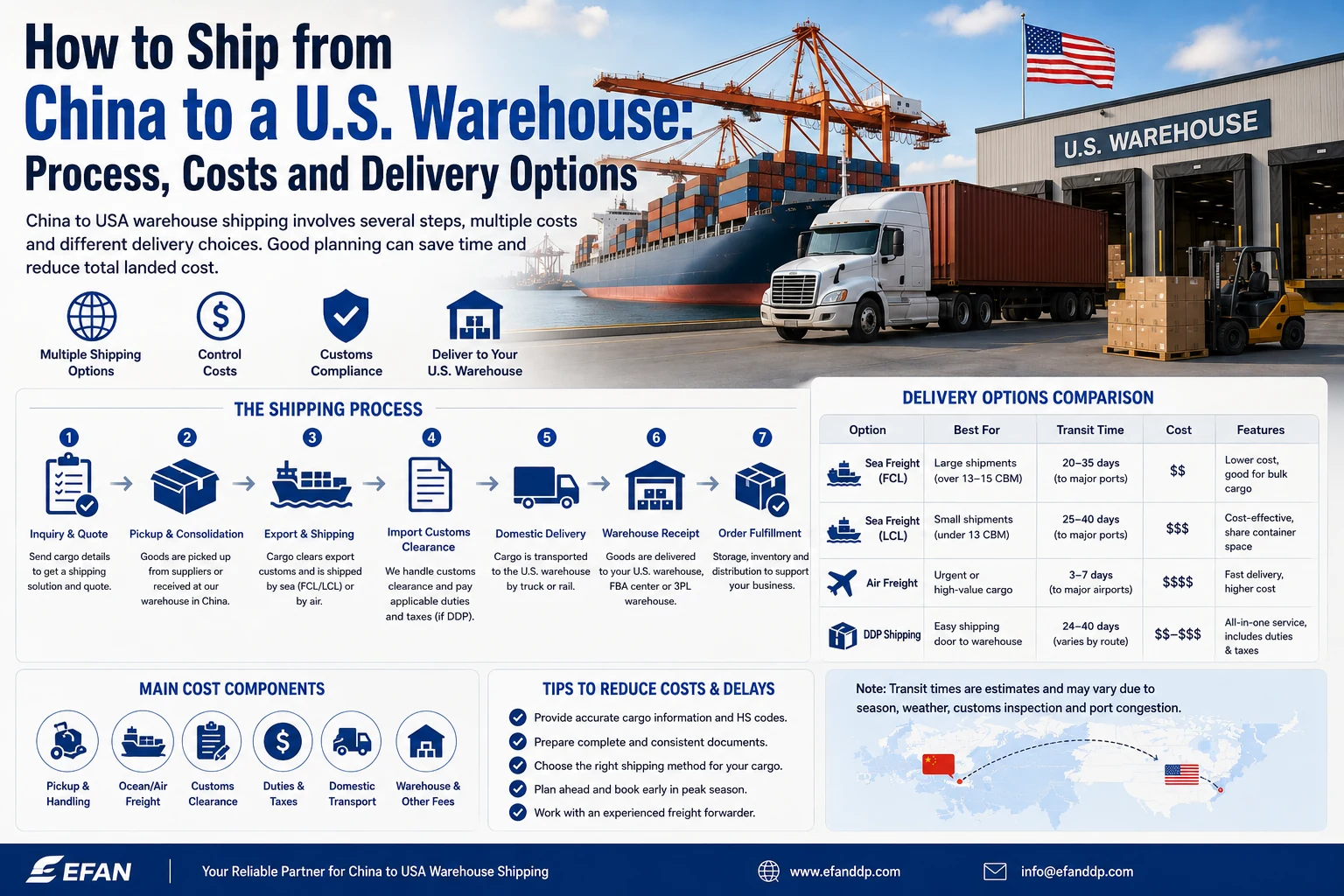
How to Ship from China to a U.S. Warehouse: Process, Costs and Delivery Options
If you import goods into the United States by ocean vessel, ISF filing is not optional. It is a legal step. Skip it, and your cargo may sit at the port. This guide explains what ISF is, how it compares to other customs filings, and why it matters for your shipments.
ISF stands for Importer Security Filing. People also call it "10+2." It is a rule from U.S. Customs and Border Protection, or CBP. The rule asks importers to send cargo details before goods leave the foreign port. This must happen at least 24 hours before the ship is loaded.
The rule began after 9/11. Homeland security became a top concern. Congress passed the SAFE Port Act in 2006. This law told CBP to collect more data on incoming cargo. CBP built the ISF program to meet that goal.
The name comes from two groups of data. Importers submit 10 data points. Carriers submit 2 more. Together, they give CBP a full picture of the shipment before it arrives.
The 10 importer elements include the seller, the buyer, and the manufacturer. They also include the ship-to party, the country of origin, and the HTSUS tariff number. Two more elements cover where the container was packed and who packed it. A detailed regulatory assessment from CBP and the Department of Homeland Security lays out each element and how it applies to different cargo types.
The 2 carrier elements are different. Carriers send a vessel stow plan. They also send container status messages. These help CBP track the ship and container movement.
Many importers confuse ISF with customs entry filing. They are not the same thing.
ISF is a security filing. It happens before the ship leaves the foreign port. Customs entry filing is different. It happens when goods arrive at a U.S. port. Entry filing deals with duties and admissibility. ISF deals with advance risk screening.
Another difference is scope. ISF only applies to ocean cargo. Air freight and truck shipments do not need it. Customs entry filing, though, applies no matter how goods arrive. This is a key point for anyone new to importing. If your goods travel by air, you skip ISF. If they travel by sea, you cannot.
The importer of record usually files the ISF. Sometimes a licensed customs broker files it instead. The importer is defined as the party that owns the goods, buys the goods, or acts as the consignee.
Filing must happen through an approved electronic system. Most importers work with a broker who already has this access. This makes the process smoother for people who ship often. Many freight forwarders bundle ISF filing with other customs clearance services, so importers do not have to manage each step alone.
Penalties are real and can be steep. A U.S. Government Accountability Office report found that ISF submission rates improved over time, rising from about 95 percent in 2012 to 99 percent in 2015 for shipments bound directly for the United States. Still, gaps remain, and CBP continues to press for full compliance.
Late or missing filings can lead to fines of several thousand dollars per violation. Cargo holds are common too. In some cases, CBP may deny the ship permission to unload at a U.S. port. These outcomes cost time and money. They also strain relationships with your supply chain partners.
ISF is part of a larger strategy. It works alongside the older 24-Hour Rule, which requires carriers to submit manifest data before loading. Together, these rules give CBP a layered view of ocean cargo. This layered approach lets CBP flag high-risk shipments early. Low-risk shipments move faster through the system.
For importers, this means one thing: accuracy matters. Wrong data can trigger a hold. Late data can trigger a fine. Good filing habits protect your shipment schedule and your bottom line.
ISF filing is a small step with big consequences. It takes planning, but it is manageable once you understand the rules. Know your deadlines. Know your data elements. Work with a broker if the process feels complex. Doing this right keeps your cargo moving and your business compliant.
U.S. Government Accountability Office. Supply Chain Security: CBP Needs to Enforce Compliance and Assess the Effectiveness of the Importer Security Filing and Additional Carrier Requirements. GAO-17-650, 20 July 2017, www.gao.gov/products/GAO-17-650.
United States Customs and Border Protection. Regulatory Assessment and Final Regulatory Flexibility Analysis for the Interim Final Rule: Importer Security Filing and Additional Carrier Requirements. U.S. Department of Homeland Security, 6 Nov. 2008,downloads.regulations.gov/USCBP-2007-0077-0200/content.pdf.
Tell us your cargo details. We help U.S. importers, Amazon sellers, and e-commerce businesses arrange shipping from Chinese suppliers to U.S. warehouses, stores, or FBA centers.