
Jul 21, 2026
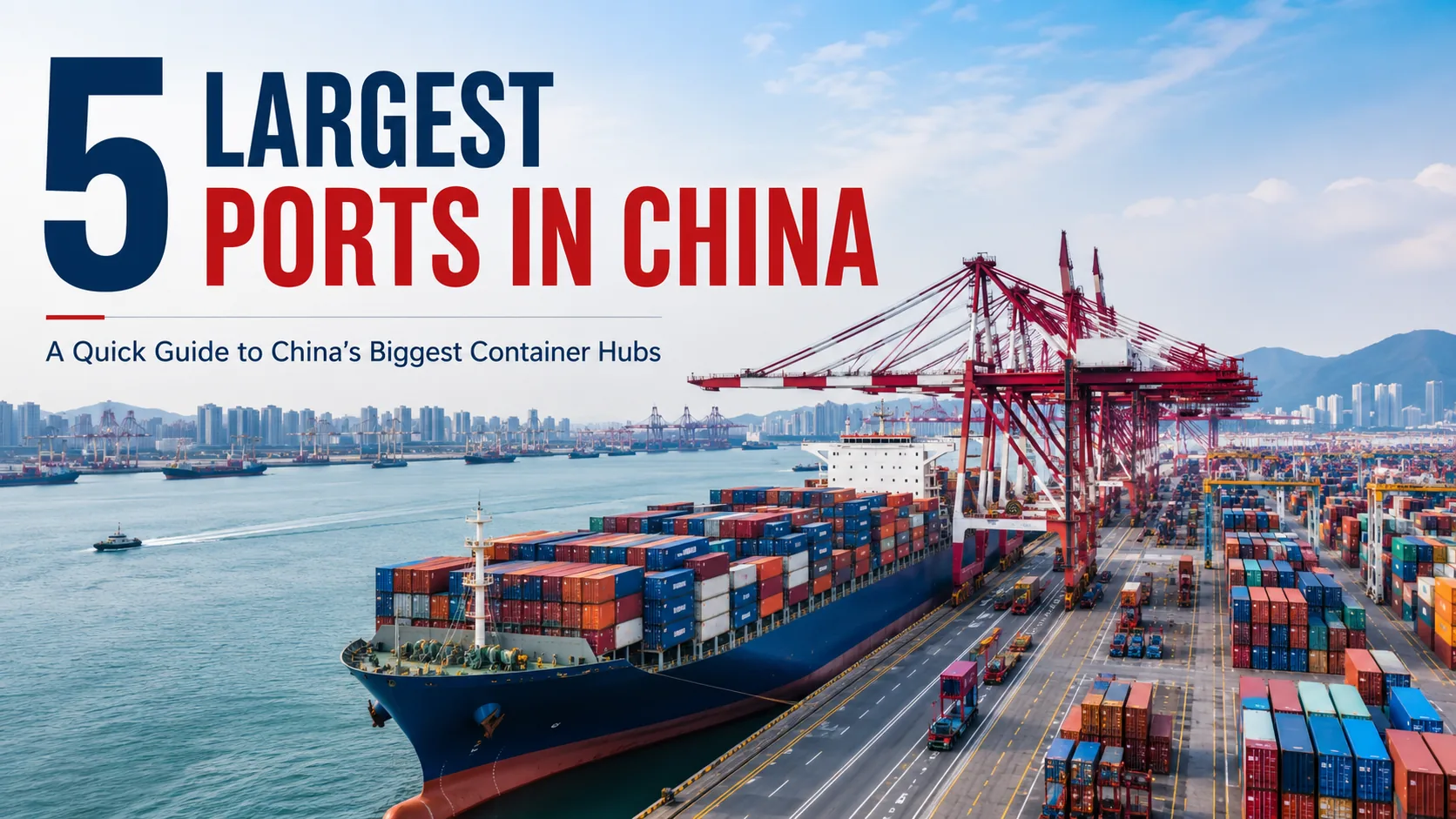
5 Largest Ports in China
An open top shipping container is a freight container without a permanent rigid roof. Most units have a removable tarpaulin supported by roof bows. This design allows crews to load cargo from above. The IMO/ILO/UNECE CTU Code describes this structure and explains that some models have removable steel roofs (International Maritime Organization, IMO/ILO/UNECE Code 24).
This equipment can solve a loading problem even when the goods stay below the container's top frame. Suitable cargo may include glass sheets on frames, large industrial tyres, and scrap steel. However, weight alone does not determine the right container.
An open top shipping container provides roof access, but its side walls still limit cargo width. The main differences are:
| Container type | Structure | Typical fit |
|---|---|---|
| Standard dry container | It has fixed walls and a rigid roof. | It suits goods that fit inside and pass through the doors. |
| Open top container | It has solid walls and a removable roof cover. | It suits loading from above and certain tall cargoes. |
| Flat rack | It has a deck and end structures, without a roof or full side walls. | It can suit cargo that also exceeds normal container width. |
These distinctions follow IMO's container type guidance (International Maritime Organization, Informative Material 17, 23–24, 37–40). A flat rack still needs checks for weight, support, and securing. Its open sides do not make every load acceptable.
For example, a machine may fit within the floor dimensions but need a crane because it cannot pass through the doors. In that case, an open top shipping container is an option to discuss with your forwarder before you change the packaging.
Open tops commonly come in 20-foot and 40-foot lengths. You should request the specifications for the actual equipment offered. You need the internal length, width, height, door opening, and clear roof opening. You also need the payload limit.
EFAN's shipping container dimensions guide explains why external size, usable space, and entrance measurements serve different purposes. A general size chart can support early planning, but it cannot replace confirmation of the selected unit.
Your measurements should include crates, pallets, protective covers, and any parts that project outward. You should also leave room for lifting equipment and securing materials. A tight fit on paper may be difficult to load safely.
Your supplier and forwarder should work from the same packing list. Any later packaging change should trigger a fresh size check.
Cargo that projects beyond the container's overall dimensions is out of gauge. The CTU Code calls for the exact excess height, width, or length to be reported to the carrier (International Maritime Organization, IMO/ILO/UNECE Code 44).
You should ask the carrier to confirm acceptance before booking. You should also confirm the inland route, vehicle choice, lifting arrangements, and any permit requirements. An open roof does not provide unlimited height clearance throughout the journey.
Your packing plan should address weight distribution and movement during transport. Heavy items can place too much pressure on a small floor area. Suitable support beams may be needed, and their design should be agreed with the container operator (International Maritime Organization, IMO/ILO/UNECE Code 104).
You should ask a competent packing team to plan the support and securing method. You should confirm how the cargo will be protected from rain and handling damage. You should photograph the packed cargo and keep the agreed measurements with the shipment records.
You should request a quote for your exact cargo, route, and equipment. The quote should identify ocean freight, loading, securing, terminal handling, inland delivery, and any extra charges for cargo beyond the frame. EFAN's guide to FCL surcharges and shipping fees explains why the base freight rate alone does not show the full cost.
Your quote should also state how long the price is valid and which costs remain subject to change. You should compare offers that cover the same services. Otherwise, a lower starting rate may hide extra handling or delivery costs. This helps you budget for the full journey.
You can send EFAN your shipment details to request a quote. Your inquiry should include packed dimensions, weight, cargo photos, pickup location, destination, and loading date. You should ask for written confirmation of equipment availability and shipment acceptance before you arrange collection.
International Maritime Organization. IMO/ILO/UNECE Code of Practice for Packing of Cargo Transport Units (CTU Code). MSC.1/Circ.1497, 16 Dec. 2014. Accessed 10 Sept. 2026.
International Maritime Organization. Informative Material Related to the IMO/ILO/UNECE Code of Practice for Packing of Cargo Transport Units (CTU Code). MSC.1/Circ.1498, 16 Dec. 2014. Accessed 10 Sept. 2026.
Tell us your cargo details. We help U.S. importers, Amazon sellers, and e-commerce businesses arrange shipping from Chinese suppliers to U.S. warehouses, stores, or FBA centers.