Jul 02, 2026
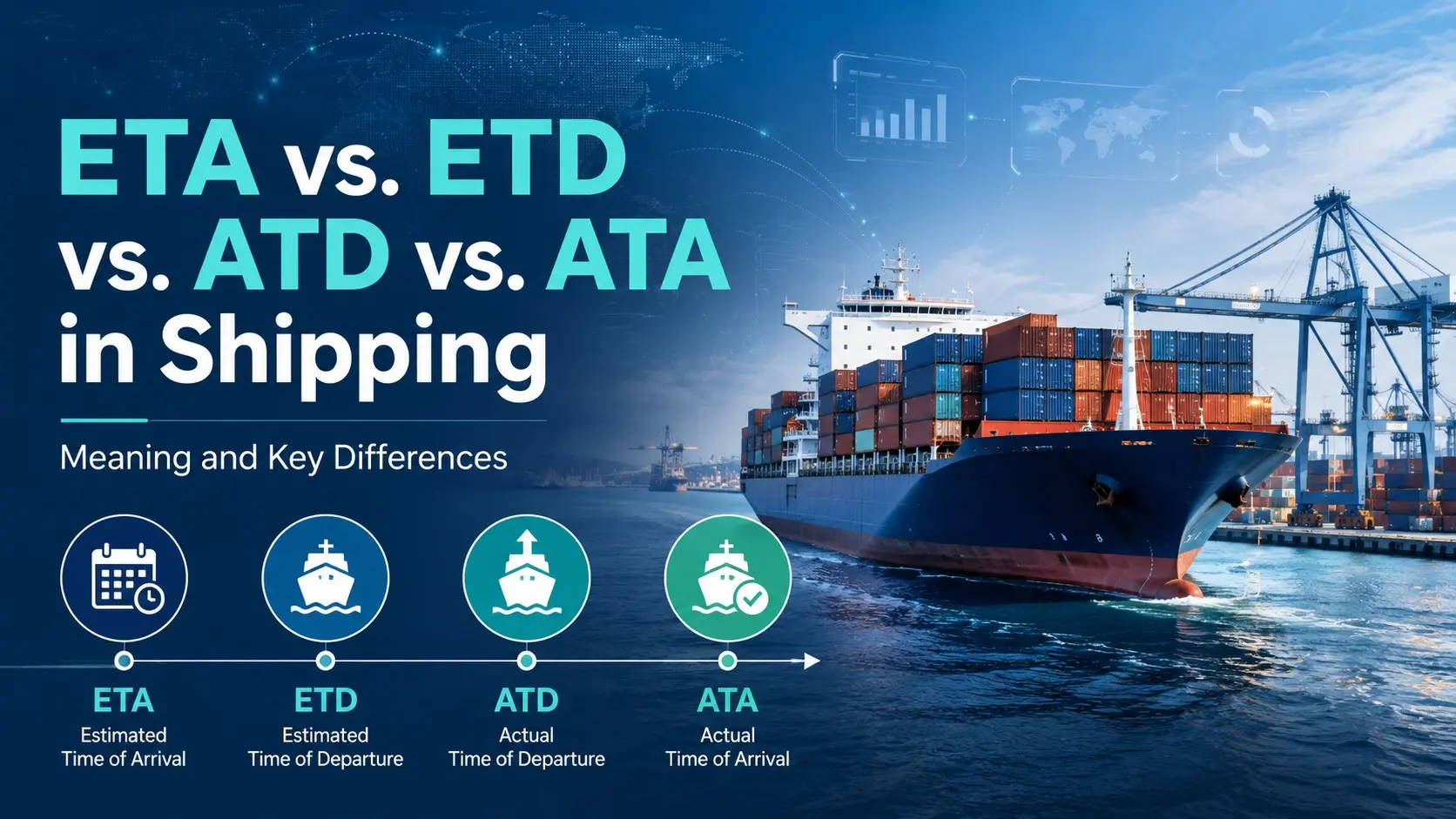
ETA vs. ETD vs. ATD vs. ATA in Shipping: Meaning and Key Differences
A June 9, 2026 market snapshot places basic ocean freight at about USD 2,050–4,550 for a 20-foot container. It places the rate for a 40-foot container at about USD 2,600–5,550 (Sky). These figures are broad reference ranges. They are not guaranteed prices. The exact live rate is unknown without the loading port, destination, cargo details, ready date, and service terms.
The search phrase “container to china” can describe the reverse trade direction. This guide covers freight from China to the United States. Importers should always confirm the direction before comparing prices.
| Container type | June 2026 reference range | Common use |
|---|---|---|
| 20-foot standard | USD 2,050–4,550 | Smaller, dense, or heavy loads |
| 40-foot standard | USD 2,600–5,550 | Large-volume or bulky loads |
A container freight rate is the price for moving one full container on an agreed route and service. Full Container Load, or FCL, means that one shipper books the container as one shipment. The container does not have to be physically full.
A basic rate often covers the ocean leg from one port to another. An all-in or door-to-door quote may cover more services. However, the words “all-in” do not always cover every possible charge.
A quote may exclude factory pickup, export paperwork, terminal handling, fuel surcharges, customs brokerage, duties, insurance, U.S. delivery, storage, demurrage, and detention. The Federal Maritime Commission explains that NVOCC tariffs must show rates, charges, rules, and practices (Federal Maritime Commission). A buyer should request written inclusions and exclusions.
Ocean freight does not have one fixed annual price. Carriers can update spot rates from week to week. The Chinese loading port and the U.S. destination create major price differences. A West Coast route and an East Coast route do not have the same distance or service pattern.
Demand, vessel space, fuel costs, port congestion, container supply, and peak-season pressure can also change the quote.
Cargo details matter too. A carrier needs the commodity name, gross weight, and container type. Batteries, dangerous goods, refrigerated products, and oversized cargo need special handling. These needs can increase the rate or reduce the available service choices.
A 40-foot container costs more in total. However, it usually does not cost twice as much as a 20-foot container. It also provides much more loading space. Therefore, a full 40-foot container can offer a lower freight cost per cubic meter.
A 20-foot container may suit dense goods because the shipment can reach weight limits before using all the space. A 40-foot container may suit furniture, textiles, and other light but bulky goods.
The best choice depends on cargo volume, weight, packing method, and local road limits. A shipper should compare the total delivered cost, not only the ocean rate.
A port-to-port ocean rate usually does not include customs duty. Duty depends on the product’s classification, customs value, country of origin, and any extra trade measures that apply.
The U.S. importer remains responsible for correct entry information. The U.S. Customs and Border Protection basic importing guide explains that CBP and the trade community share responsibility for following import laws (U.S. Customs and Border Protection).
Door-to-door service can include inland pickup and final delivery. Under the DDP Incoterm, the seller normally handles import clearance and duties. Still, the quotation should state whether it excludes inspections, storage, or special handling.
The importer should provide the Chinese pickup address or port, U.S. port or delivery ZIP code, commodity, gross weight, cargo volume, container size, ready date, and Incoterm. The importer should also disclose batteries or regulated cargo.
A useful quote should state its validity period, route, transit estimate, free time, included charges, and possible surcharges. Importers can request a route-specific quotation from www.efanddp.com and compare it with another quotation under the same terms. This step prevents a low port rate from being mistaken for the final landed cost.
The June 2026 reference range is about USD 2,050–4,550 for a 20-foot container and USD 2,600–5,550 for a 40-foot container. These numbers are suitable for early budgeting only. A current written quote is the only reliable answer for a specific shipment.
Federal Maritime Commission. “Ocean Transportation Intermediaries.” Federal Maritime Commission. Accessed 30 July 2026.
Sky. “Cost of Shipping 20ft & 40ft Container from China to USA.” Basenton, 9 June 2026. Accessed 30 July 2026.
U.S. Customs and Border Protection. “Basic Importing and Exporting.” U.S. Department of Homeland Security, 10 Feb. 2026. Accessed 30 July 2026.
Tell us your cargo details. We help U.S. importers, Amazon sellers, and e-commerce businesses arrange shipping from Chinese suppliers to U.S. warehouses, stores, or FBA centers.