Jul 03, 2026
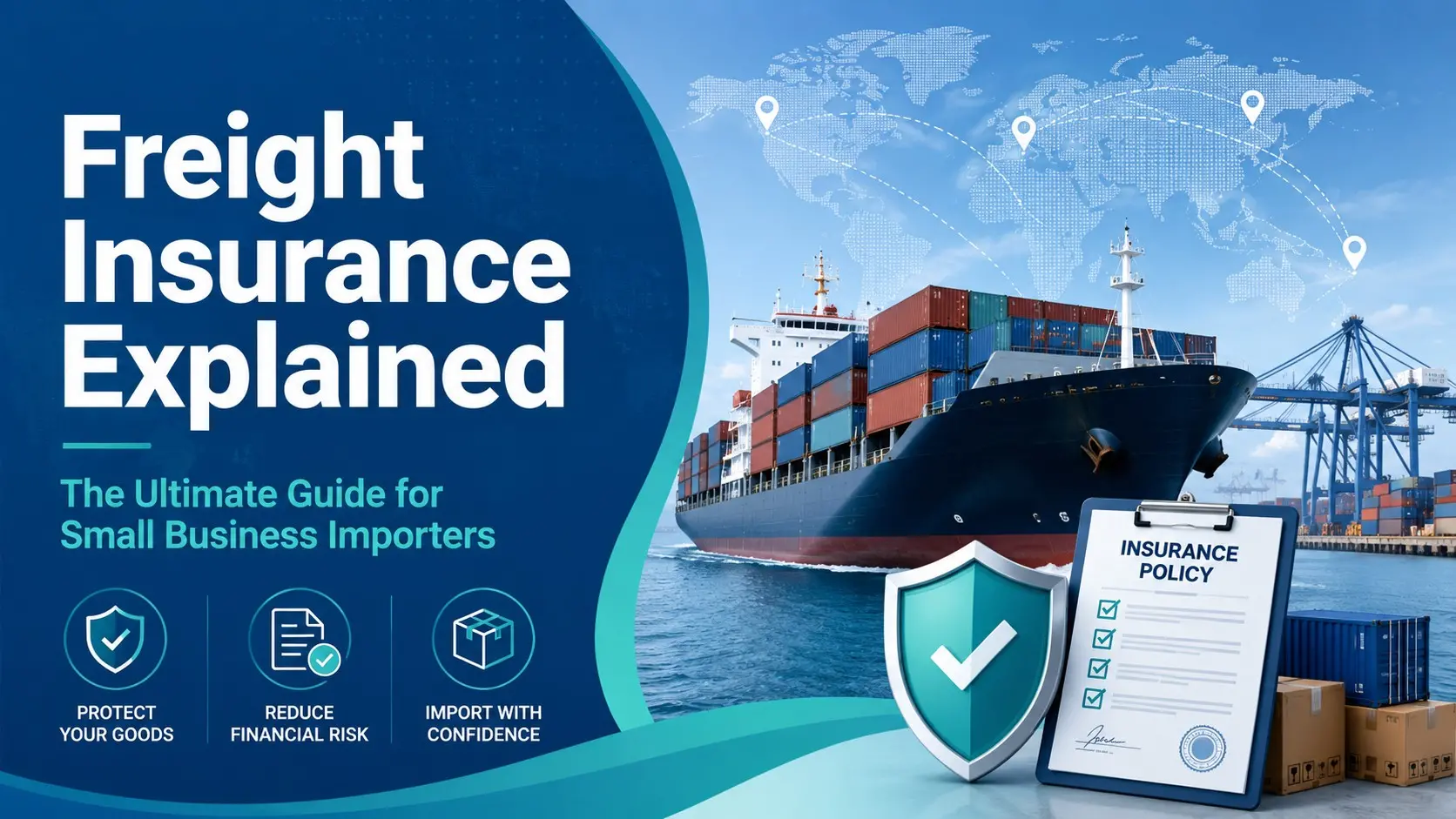
Freight Insurance Explained: The Ultimate Guide for Small Business Importers
U.S. Customs and Border Protection has issued new entry guidance for Section 301 tariffs connected to forced-labor import policies. The action covers imports from 60 economies and starts at 12:01 a.m. Eastern Time on July 24, 2026.
For many non-exempt goods originating in China, the new additional duty is 12.5%. However, importers should not assume that every China shipment will simply become 12.5 percentage points more expensive. The temporary 10% Section 122 surcharge ends at the same time. Product exemptions and other existing duties can also change the final result.
The Office of the United States Trade Representative launched 60 investigations into whether different economies had failed to impose and effectively enforce bans on imports made wholly or partly with forced labor.
USTR later decided that action under Section 301 of the Trade Act of 1974 was appropriate. The final action applies new duties of 10% or 12.5% to products from the investigated economies. General and economy-specific exemptions also apply.
The official CBP filing guidance states that the duties apply to covered goods entered for consumption, or withdrawn from a bonded warehouse for consumption, on or after 12:01 a.m. Eastern Time on July 24, 2026.
CBP assigned China-origin goods to HTSUS heading 9903.05.31. Covered goods will face an additional ad valorem duty of 12.5%.
This rate applies to the customs value of the goods. For example, a covered shipment with an entered value of $100,000 would generate $12,500 in duty under this new Section 301 action alone.
The word “alone” is important. The new duty does not automatically replace the normal Most-Favored-Nation duty, older China-related Section 301 duties, antidumping duties, countervailing duties, or other applicable charges.
The USTR final notice states that covered products remain subject to other applicable duties, taxes, fees, and charges.
Importers should therefore calculate the complete duty stack for each HTSUS classification. Importers should not multiply the invoice value by 12.5% and treat that figure as the total import tax.
Not necessarily.
The earlier temporary Section 122 import surcharge remained in effect only through 12:01 a.m. Eastern Daylight Time on July 24, 2026. The presidential proclamation that created the surcharge set a 10% rate for covered imports.
The new Section 301 action begins when that temporary surcharge ends. For a China-origin product that was subject to the old 10% Section 122 surcharge and is now subject to the new 12.5% Section 301 duty, the direct change between these two measures is normally 2.5 percentage points.
For example:
Expiring Section 122 surcharge on $100,000: $10,000
New forced-labor Section 301 duty on $100,000: $12,500
Difference between the two measures: $2,500
This comparison can be different when a product was exempt under one action but not the other. Importers must check both the product classification and the applicable exemption rules.
The 10% additional rate generally applies to goods from Argentina, Bangladesh, Cambodia, Canada, Ecuador, El Salvador, Guatemala, Honduras, India, Indonesia, Jordan, Malaysia, Mexico, Pakistan, Sri Lanka, Trinidad and Tobago, and the United Kingdom.
The European Union and Taiwan use a “net of MFN” structure. The combined MFN and new Section 301 rate is generally capped at 10%.
Japan, South Korea, and Switzerland use a similar structure with a 12.5% cap.
The remaining 38 investigated economies, including China, generally face a 12.5% additional rate. The final rate still depends on the exemptions and special rules in the official notice.
Yes. The policy contains general exemptions and economy-specific exemptions.
China receives the general exemptions. However, the notice does not provide China with a separate economy-specific product list.
The general exemptions include:
Products covered by specified HTSUS classifications in the official exemption list
Certain civil aircraft, engines, parts, components, and flight simulators
Articles for specified pharmaceutical applications
Specified steel, aluminum, copper, vehicle, vehicle-part, wood, and semiconductor articles
Certain humanitarian donations
Informational materials
Goods that qualify for applicable Chapter 98 treatment, subject to stated exceptions
The complete product schedule is detailed. CBP attached a 39-page HTSUS list to its guidance.
Importers should not decide eligibility from a broad product name such as “electronics,” “auto parts,” or “medical products.” Importers should check the full HTSUS number and its legal description.
Some cargo can qualify for a narrow in-transit exemption.
The goods must meet both conditions:
The goods were loaded onto a vessel at the port of loading and were in transit on the final mode of transport before 12:01 a.m. Eastern Time on July 24, 2026.
The goods are entered for consumption, or withdrawn from a warehouse for consumption, before 12:01 a.m. Eastern Time on July 28, 2026.
A departure before July 24 does not create an open-ended exemption. The shipment must also meet the July 28 entry deadline.
Importers should keep the bill of lading, loading records, carrier records, and customs entry documents needed to support an exemption claim.
The new 12.5% duty is only one part of the landed cost.
A China-to-U.S. shipment may also face:
The normal MFN duty
Existing China Section 301 tariffs
The new forced-labor Section 301 duty
Antidumping or countervailing duties
Merchandise processing and customs fees
Ocean or air freight charges
Port, warehouse, and final-delivery charges
For example, a product may already face a normal duty and an older 25% China Section 301 tariff. If the product is also covered by the new policy, the importer may need to add the new 12.5% duty.
The exact result depends on the HTSUS code and available exemptions. Importers should not use one general tariff percentage for every product from China.
First, importers should confirm the correct 10-digit HTSUS classification. A small classification error can change the normal duty, Section 301 treatment, and eligibility for an exemption.
Second, importers should ask their customs broker for a written landed-cost calculation. The calculation should separate the MFN duty, existing China Section 301 duties, the new 12.5% action, possible antidumping or countervailing duties, and customs fees.
Third, importers should review cargo that was already loaded before the effective time. The in-transit window is short, so entry timing and supporting records matter.
Fourth, importers should update purchase orders, DDP quotations, and sales contracts. Buyers and sellers should clearly understand who is responsible for any additional duty.
Businesses that need a practical overview can read our guide to U.S. import customs clearance from China.
Finally, importers should compare shipping and inventory plans by using the complete landed cost. Freight is only one part of that cost. Our guide to shipping from China to the USA explains the main transportation methods and cost factors.
The new policy creates a 12.5% Section 301 duty for many China-origin products from July 24, 2026. It is a new forced-labor-related trade action. It is not simply an extension of the temporary Section 122 surcharge.
For many products that move directly from the expiring 10% surcharge to the new 12.5% duty, the immediate change is 2.5 percentage points.
However, the final customs bill depends on the HTSUS code, product exemptions, country of origin, entry date, existing trade remedies, and other charges.
Importers should verify the classification and full duty stack before confirming a quotation or shipping plan. This article provides general information and does not constitute legal or customs advice.
Tell us your cargo details. We help U.S. importers, Amazon sellers, and e-commerce businesses arrange shipping from Chinese suppliers to U.S. warehouses, stores, or FBA centers.